Japan’s Rapidus 2nm Pilot Line: Can Japan Reclaim Advanced Logic Leadership?
Japan can rebuild a position in advanced logic manufacturing. Whether Rapidus can turn that ambition into commercial leadership remains an open question—and the answer will depend on considerably more than transistor performance.

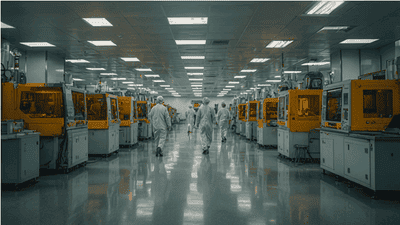
The company’s pilot line in Chitose, Hokkaido, began testing operations in April 2025, using technology developed with IBM. Rapidus continues to target commercial-scale 2nm manufacturing in 2027. That makes the project a serious attempt to reenter leading-edge chip production, but a pilot line is a starting point, not proof of a competitive foundry business.
Between those two milestones lies a demanding financial journey. Interest rates determine the cost of patient capital. Exchange rates influence imported equipment and future revenue. Credit conditions shape how much risk suppliers and lenders will accept. Energy and construction costs affect the economics of the factory itself.
Seen this way, Rapidus is not simply a semiconductor comeback story. It is a test of whether Japan can align technology, industrial policy, and financial conditions long enough to build an internationally competitive manufacturing platform.
What Would “Reclaiming Leadership” Actually Mean?
The title invites a dramatic interpretation: Japan returns, overtakes its rivals, and restores an earlier industrial order.
A more useful definition is less theatrical. Leadership would mean delivering qualified chips with competitive performance, dependable yields, acceptable costs, and credible production schedules.
Node labels alone cannot establish that achievement. A 2nm process must work inside customers’ designs, supported by usable design tools, validated intellectual property, packaging options, and reliable manufacturing execution.
Rapidus does not need to become the largest foundry immediately to matter. A trusted source of advanced logic could improve Japan’s strategic position and offer customers another production option.
But technological relevance and financial sustainability are separate hurdles. The pilot line addresses the first. Sustained customer demand must eventually address the second.
The Pilot Line Is Where Uncertainty Becomes Measurable

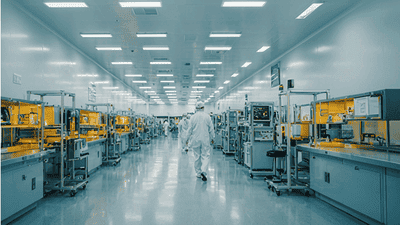
A research process demonstrates technical possibility. A pilot line tests whether that possibility can become repeatable manufacturing.
Engineers must learn how processing steps interact, how defects emerge, how devices vary, and how equipment performs over repeated runs. Customers need evidence that the process can support complete products rather than isolated demonstrations.
This learning has a financial consequence: it can reduce uncertainty.
Better manufacturing data makes investment decisions more informed. It helps customers evaluate design commitments and gives financiers a clearer view of remaining risks.
Yet uncertainty is reduced incrementally, not eliminated in one announcement. A successful prototype does not guarantee profitable volume production.
For the macro investor, the useful progression is therefore not “factory opened, leadership restored.” It is “technical evidence improved, some risks narrowed, commercial questions remain.”
Interest Rates: The Cost of Waiting
Advanced semiconductor manufacturing requires large expenditures before meaningful customer revenue arrives. That timing makes interest rates relevant even when a project receives government support.
Higher financing costs can raise the burden of debt-funded construction, equipment purchases, and working capital. They can also make private investors demand stronger returns for committing money to a long, uncertain development program.
Public equity and subsidies soften that pressure, but they do not make capital economically free. Government resources have competing uses, while corporate investors compare the project with other opportunities.
There is also a valuation effect. When required returns rise, distant future profits become less valuable today.
Rapidus therefore benefits from financing that remains available through technical setbacks—not merely financing that looks inexpensive at the start. A long development schedule needs funding whose patience matches the engineering timetable.
Credit: Who Carries the Manufacturing Risk?

A mature foundry can borrow against an operating record, established customers, and recurring cash flow. A new leading-edge entrant has fewer of those advantages.
That changes the structure of financing. Early technology and ramp-up risk are difficult to absorb through conventional debt alone because repayment schedules do not wait for yield improvement.
Government investment, corporate equity, and subsidies can carry risks that ordinary lenders may be reluctant to accept.
Rapidus announced a KRW-free, yen-denominated funding round of JPY 267.6 billion in February 2026, comprising JPY 100 billion from Japan’s Information-Technology Promotion Agency and JPY 167.6 billion from private-sector investors. A further JPY 150 billion agency investment followed in June, bringing the company’s reported capital funding total to JPY 424.95 billion.
These equity investments should not be confused with subsidy approvals or the project’s total spending requirements. Different funding instruments carry different conditions, obligations, and protections.
The Yen: An Advantage With an Expensive Reverse Side
A weaker yen can improve the competitiveness of a Japanese manufacturer selling internationally. Foreign-currency revenue translates into more yen, while some domestic expenses remain yen-denominated.
That familiar export argument is incomplete for a factory still being equipped.
Advanced manufacturing depends on internationally sourced tools, components, services, and technology. Where purchases are priced in foreign currencies, yen depreciation can raise their domestic cost.
The timing matters. During construction, Rapidus may experience the import-cost effect before it receives substantial export revenue. Later, a different currency environment could prevail when shipments expand.
Consequently, “weak yen equals good news” is not a reliable project-level conclusion.
The relevant questions concern actual currency exposure: which purchases are contracted, when payments occur, how much is hedged, and what currencies customers eventually use. Exchange rates influence competitiveness, but their effect changes across the project’s life cycle.
Commodities Enter Through the Factory Door

A leading-edge fab is a highly sophisticated industrial facility, not an abstraction floating above the commodity economy.
Construction depends on materials and specialized infrastructure. Operation requires electricity, water systems, chemicals, gases, and dependable logistics.
Rising input costs can affect both the initial investment and the ongoing cost of production. However, these exposures should not be treated as identical.
Bulk construction materials respond differently from qualified semiconductor chemicals. Electricity costs depend on supply arrangements and local conditions, not simply on one global commodity benchmark.
The distinction matters because reliability can outweigh price. A cheaper input is not useful if it jeopardizes process stability or fails qualification.
For Rapidus, the commodity question is therefore twofold: can it control costs, and can it secure inputs that consistently meet manufacturing requirements?
Government Support Changes the Runway, Not the Finish Line
Japan’s commitment is substantial. In April 2026, the industry ministry approved an additional JPY 631.5 billion to support Rapidus research and development.
Such backing can prevent short-term financial pressure from interrupting a project with long-term strategic value. It can also encourage suppliers and corporate partners to commit resources.
But public support cannot manufacture customer satisfaction.
Customers still need functioning designs, reliable delivery, and commercially acceptable economics. A subsidy can absorb part of the development cost; it cannot force a processor to meet its performance target.
The policy challenge is to provide continuity while preserving accountability. Support tied to meaningful technical and commercial milestones can help distinguish progress from spending.
The danger lies at either extreme: withdrawing support before a credible ramp can mature, or extending it indefinitely without evidence of a viable business.
The Customer Is the Missing Financial Multiplier
From an engineer’s perspective, yield improvement is a milestone. From a credit analyst’s perspective, a committed customer can be equally important.
Customer engagement makes future demand more visible. Successful qualification can reduce commercial uncertainty. Production agreements can strengthen the case for additional investment.
But these stages must remain distinct. An interested company is not an order. A design partnership is not necessarily a completed product. A tape-out does not automatically become high-volume revenue.
Rapidus’ challenge is to move customers through that sequence while its own process matures.
This is also why a design ecosystem matters. The easier it is for customers to evaluate, develop, and validate chips, the more credible the route from technical capability to factory utilization becomes.
Commercial commitments are the bridge between industrial ambition and financeable demand.
AI Demand Helps—but Does Not Remove the Cycle
The expansion of AI computing provides a favorable backdrop for advanced logic. Yet a promising end market does not guarantee that a particular foundry wins production.
Customers make decisions based on performance, power consumption, cost, execution risk, and ecosystem readiness. Existing manufacturing relationships can be difficult to displace.
Meanwhile, macro conditions influence the spending behind those decisions. Tighter credit can raise the hurdle for infrastructure projects. Higher required returns can make buyers more selective about deployments.
Rapidus must therefore distinguish industry demand from accessible demand.
A growing market creates opportunity, but the company needs products it can manufacture competitively and customers willing to entrust those products to a new production platform. Capacity that arrives without that alignment can remain financially burdensome even in an expanding industry.
Two Plausible Paths Through the Macro Environment
Consider a favorable path. Technical milestones arrive on schedule, customer qualification advances, and financing remains dependable. Currency and input costs stay manageable enough to preserve the investment plan.
Under those conditions, the pilot line becomes a source of confidence. Additional commitments reinforce one another: customers support utilization, utilization supports financing, and financing supports further manufacturing improvement.
Now consider the opposite. Equipment costs rise, development takes longer, and customers postpone decisions. Funding may still be available, but more capital is required before commercial uncertainty declines.
The project becomes vulnerable to a timing mismatch rather than a single technological failure.
These are scenarios, not forecasts. Their value is to show that the same technical program can produce different financial outcomes depending on how milestones, costs, and demand arrive relative to one another.
What Financial Markets Should Actually Watch
The most useful monitoring framework combines operating evidence with macro exposure:
- Whether pilot results translate into repeatable manufacturing performance.
- Whether customer engagement becomes qualified production commitments.
- Whether funding covers the next stage without creating an excessive repayment burden.
- Whether currency movements materially change unhedged equipment and operating costs.
- Whether input availability and infrastructure keep pace with the ramp.
- Whether customer demand supports economically useful factory utilization.
Each indicator answers a different question. Funding measures runway. Technical evidence measures capability. Customer commitments measure commercial relevance.
Confusing one with another is how an industrial-policy announcement becomes an overly confident investment thesis.
A Comeback Built on Coordination
Rapidus gives Japan a credible opportunity to rebuild advanced logic capability. The pilot line is important because it turns that ambition into a manufacturing program that can be tested, improved, and judged.
The decisive requirement is coordination. Engineering progress must align with patient financing. Currency exposure must align with purchasing schedules. Capacity must align with customer qualification and consumption.
Japan does not need a favorable movement in every macro variable. It needs a structure resilient enough to survive unfavorable ones.
That is the real test behind the 2nm headline. Reclaiming leadership means more than making an advanced transistor. It means building an operating business that customers trust—and that can remain competitive after the initial excitement fades.
Related Posts